Who'd have thought the growing season, and pollinator season, of southern New England starts in late February? But it does.
First, there's that funky swamp-life called skunk cabbage. The odiferous blossoms smell mighty good to particular flies and beetles. Those flies offer something to the skunk cabbage, too: pollination.
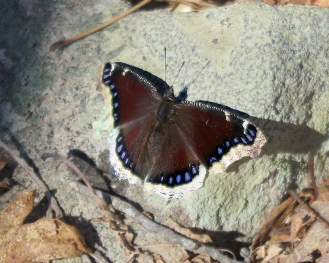
A mourning cloak butterfly flies on March 21. Early-blooming red maples provide it with nectar.
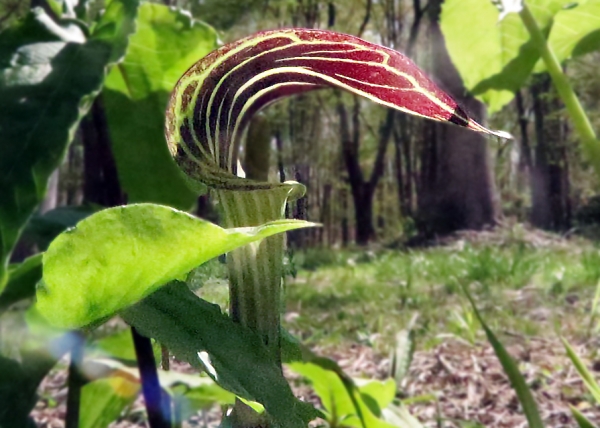
Jack-in-the-pulpit appears in late March, attracting its own pollinators--fungus gnats.
Indeed, the growing season—and pollinator season--of southern New England starts sooner than you may think and doesn’t end until early November. If you’re dreaming of this year’s flowers and want to support birds and pollinators, too, the month-by-month lists below will help. See the names of native plants that, if carefully selected, will offer continuous pollen, nectar, berries, seeds, and habitat.
Here's a month-by-month list of plants that I've recorded over several years:
March: You may find early-flying mason bees and mining bees on the pussy willows this month. Other late March blossoms include silver maples and black willows.
April: The number of blossoming natives explodes in April, as do the active insects. Watch the colors pop on spicebush, serviceberries, blueberries, huckleberries, early dogwoods, fothergilla, and several azaleas. Less showy, but no less important, are the blossoms of birches, hackberries, hazelnuts, and hophornbeams.
By late April, spring ephemerals such as trout lily, rue anemone, wood anemone, ‘spring beauty’, blunt-lobed hepatica, bloodroot, bluets, offer food for both bees and ants. So do violets, golden alexanders, marsh marigolds, green-and-gold, golden groundsels, woodland strawberries, and many sedges. Serviceberries and highbush blueberries bloom by the end of the month, too.
May: Some of the showiest trees blossom this month, including redbuds, native cherry trees, and beach plums. Dogwoods begin blooming in April but continue their display into May, as do chokeberries, fragrant sumacs, Labrador tea, ninebark, Allegheny blackberries, and bush honeysuckle. Less showy but equally pollinator-friendly May bloomers include inkberries, winterberries, bearberry, sand cherry, sugar maples, white oaks, sassafras, American hollies, and hornbeams. Native fleabane abounds. Blue-eye-grass blossoms in May. Penstemons begin its six-week display by the end of this month.
June: Sweetbay magnolias and hawthorns light up, as do American basswood, blackgum, speckled alder, red and black elderberries, swamp rose, potentilla, New Jersey tea, ninebark, and some viburnums. Rhododendrons and azaleas bloom, along with Carolina allspice, and the less showy but pollinator-friendly sweet fern.
Also in June, native perennial flowers arrive en masse. They include yellow baptisia, lupine, wild bergamot, spotted bee balm, yarrow, milkweeds, American heuchera, mountainmint, anise hyssop, Ohio spiderwort, and queen of the meadow.
July: Most native trees have bloomed by now, but sumacs and a southeastern native, sourwood, flower this month. Among native shrubs, we can enjoy mountain laurel, Carolina rose, swamp rose, more rhododendrons, and the less showy but pollinator-friendly bayberry.
July perennial flowers include evening primrose, several types of goldenrod, spotted beebalm, Joe-Pye weed, culver’s root, black-eyed Susans, coneflowers, boneset, large-leaved wood-aster, and blue lobelia.
August: Sweet pepperbush and steeplebush often begin blooming in July but make their best show in August, as does wetland-loving buttonbush. Some sumacs continue blooming in August. The perennial flower parade is abundant, with more goldenrod varieties, partridge peas, asters, rose mallow, and Helen’s flower. Moisture-loving cardinal flower and turtlehead bloom in August, too.
September: The stunningly pretty Franklinia tree blooms in this month. It is a southeastern native named for Benjamin Franklin, and though long extinct in the wild, it is still available in the nursery trade. Perennial blossoms include more goldenrod varieties, more asters, New York ironweed, and white snakeroot (also called chocolate Joe-Pye weed).
October and early November: The last showy goldenrod and aromatic asters attract late pollinators in droves. Native witch hazel, our latest blooming native plant, sends out its curious yellow flowers. The flowers last until mid-November some years.
Let the planning begin!
Edited 4/20/26